

Why Wedding Stylists in New York, NY Recommend Instant Volume Hair Accessories
May 28, 2026
Copenhagen Fashion Week SS27: Key Highlights, Trends and Designers
June 15, 2026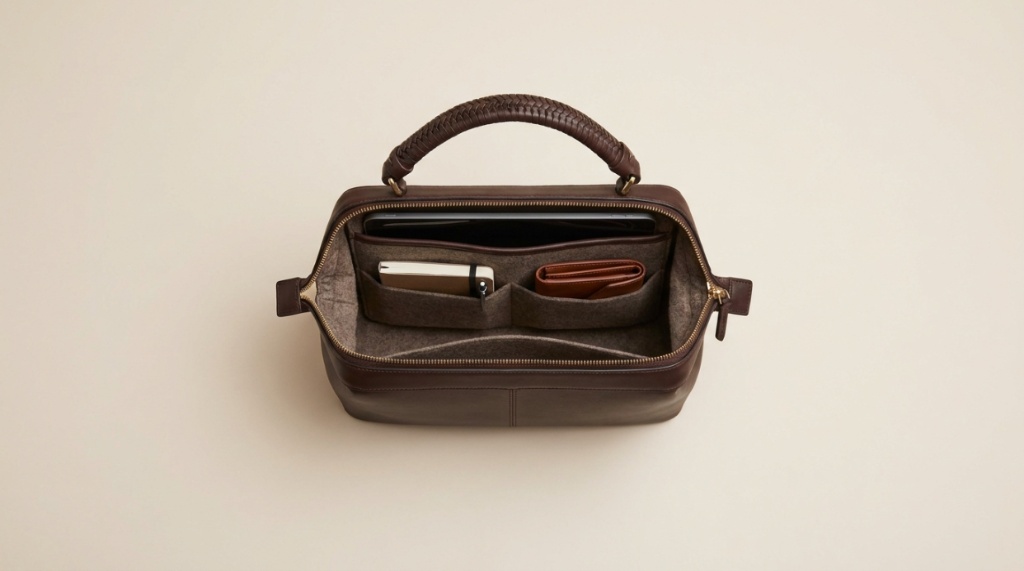
The creative director at a major agency once told me her interview trick: she watches how candidates place their bag when they sit down. A structured bag that sits neatly beside the chair signals preparation and control. A soft bag that slumps into a pile signals the opposite — whether fair or not. Structured handbags communicate intentionality before you speak a single word, maintaining their architectural form whether full or empty, on your arm or on a table. For women’s handbags that must perform across work meetings, airport security, client dinners, and Saturday errands without ever looking deflated or disorganized, structure is not a style preference — it is a functional requirement. This guide identifies the specific construction features, dimensions, and materials that allow a single structured handbag to transition seamlessly between professional, travel, and casual contexts without compromise in any of them.
What Makes a Handbag “Structured” and Why Does It Matter?
A structured handbag maintains its silhouette independently through internal stiffeners, quality leather weight, or architectural design — meaning it looks composed sitting on a restaurant floor, an airplane overhead bin, or a conference table without collapsing, slumping, or requiring contents to hold its shape.
Structure types:
- Internal frame structure: Hidden stiffeners (card, plastic, or leather inserts) built into panels maintain shape. Most common in luxury brands. Provides rigid form without visible construction elements.
- Self-structured (leather weight): Premium heavy leather (1.2mm+ thickness) holds shape through its own body without additional stiffeners. The mark of exceptional leather quality. Develops character without losing form.
- Architectural structure: The bag’s geometric design creates inherent stability — angular bases, reinforced corners, and strategic seaming that resist collapse. Common in modern minimalist designs.
Why structure matters for multi-context use:
- Professional credibility: Maintains polished appearance throughout long workdays regardless of how often you open, set down, or carry the bag
- Content protection: Rigid walls protect electronics, documents, and fragile items from external pressure
- Independent standing: Sits upright on any surface without requiring a hook or lean — essential in restaurants, meetings, and public spaces
- Consistent aesthetic: Looks the same whether carrying two items or twenty — never reveals whether you are packed light or heavy
What Size Structured Handbag Works Across Work, Travel, and Daily Life?
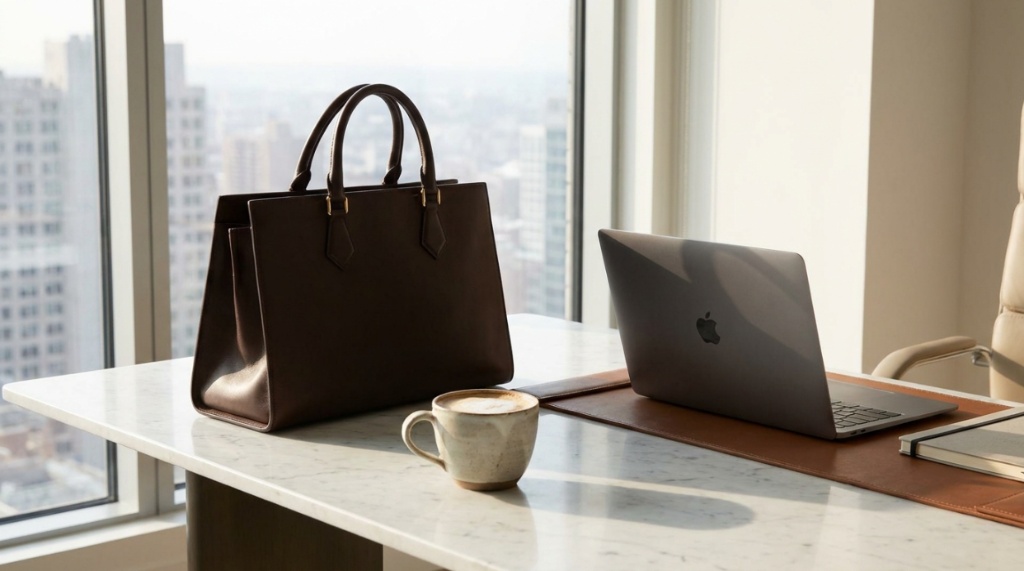
A medium-large structured handbag measuring 11–13 inches wide, 8–10 inches tall, and 5–6 inches deep covers the widest range of contexts — accommodating work documents, travel essentials, and daily carry without appearing oversized in professional settings or inadequate for travel days.
Size optimization by context:
| Context | What Must Fit | Minimum Dimensions Needed |
|---|---|---|
| Work day | Phone, wallet, keys, small tablet/e-reader, business cards, pen, compact mirror | 10 × 7 × 4 inches |
| Travel day | Above + passport, boarding pass, snack, small water, headphones, charger | 12 × 9 × 5 inches |
| Daily errands | Phone, wallet, keys, sunglasses, lip balm, hand sanitizer | 9 × 7 × 4 inches |
| Evening out | Phone, card case, keys, lipstick | 7 × 5 × 3 inches (smaller bag) |
The 11–13 inch width covers work and travel without appearing oversized for daily use. This is the “Goldilocks zone” where the bag looks appropriate in a boardroom yet carries enough for a travel day without supplemental bags. Below 10 inches, you sacrifice travel functionality. Above 14 inches, you enter tote territory and lose structured elegance.
Which Materials Maintain Structure While Aging Gracefully?
Vegetable-tanned full-grain leather (1.0–1.4mm thickness) provides the best combination of natural structure, aging patina, and decades-long durability — maintaining its form through years of daily use while developing the character that makes structured bags more beautiful over time rather than less.
Material comparison for structured bags:
- Vegetable-tanned leather (best): Heavy, naturally stiff, develops rich patina. Maintains structure through leather weight alone. Scratches blend into character. Lasts 15–30+ years.
- Chrome-tanned leather (good): Softer, lighter, takes color well. Requires internal stiffeners for structure. Ages less visibly — maintains initial appearance longer but develops less character.
- Saffiano leather (very good for durability): Cross-hatch textured surface resists scratches and staining. Naturally semi-rigid. Excellent for high-use contexts (work, travel). Less organic aging than smooth leather.
- Epsom/textured leather (good): Pressed grain resists wear. Semi-structured naturally. Hides marks well. Common in luxury brands for everyday bags.
- Coated canvas (functional): Lightweight, water-resistant, extremely durable. Does not develop patina. Requires internal structure. Best for travel-focused bags. also learn fake Chanel bag
What Features Make a Structured Bag Work for Professional Settings?
Professional functionality requires: a flat base with protective feet, interior organization (minimum two compartments plus zippered pocket), an exterior that maintains appearance throughout a 10-hour day, a closure that opens one-handed without fumbling, and the ability to sit independently beside a chair or on a table.
Professional-essential features:
- Flat stable base: The bag must sit upright unsupported on office floors, restaurant booths, and meeting room tables. Rounded bases that roll or tip fail in professional settings.
- Metal feet: Protect the bag bottom from surface contact — preventing scuffing, moisture absorption, and visible wear on the most vulnerable panel.
- Organized interior: Designated phone pocket, zippered security pocket, and enough compartments to retrieve items without rummaging in front of colleagues or clients.
- Quiet closure: Magnetic snaps or smooth zippers that operate silently. Loud clasps, chains, or buckles draw attention in quiet meeting environments.
- Minimal external branding: Subtle or internal branding maintains professionalism across all corporate cultures — from conservative finance to creative agencies. Prominent logos can read inappropriately in certain professional contexts.
What Makes a Structured Bag Travel-Ready?
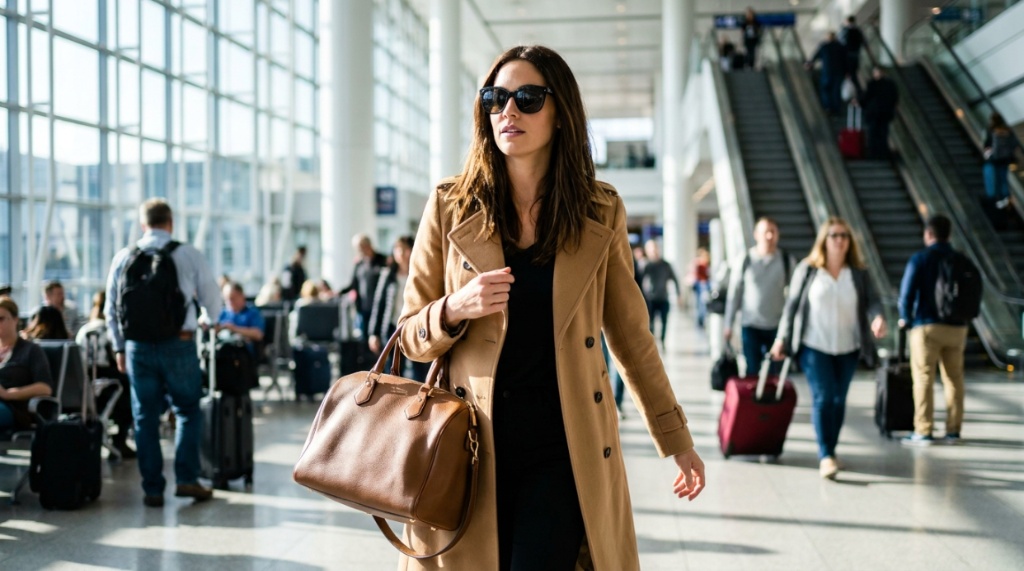
Travel readiness requires: fitting under an airplane seat or in an overhead bin, having a secure closure that prevents access in crowds, offering a hands-free carry option (shoulder strap), and using materials that resist scuffing from luggage handling and security belt surfaces.
Travel-critical features:
- Airline compatibility: Must fit under the seat in front (maximum 14 × 10 × 6 inches for most airlines) as a personal item. Structured bags that fit these dimensions serve as both personal item and daily bag at destination.
- Secure closure: Full zipper or secure flap closure that prevents pickpocketing in crowded airports, trains, and tourist areas. Open-top or magnetic-only closures are insufficient for travel security.
- Convertible strap: Detachable crossbody or shoulder strap for hands-free navigation through airports, train stations, and city walking. Essential for travel days where you manage luggage simultaneously.
- Scratch-resistant material: Textured leathers (Saffiano, Epsom, pebbled) resist the scuffing that smooth leathers sustain from security belts, luggage tags, and overhead bin handling.
- Trolley sleeve (bonus): A back panel sleeve that slides over rolling luggage handles — keeping the bag secure atop your suitcase during airport navigation.
For comprehensive reviews of structured handbags tested across professional, travel, and daily-use scenarios, structured handbags reviewed for California work and travel provides real-world performance assessments from women who carry these bags through actual meetings, flights, and weekend outings — not just photoshoots.
Conclusion
Choosing a structured handbag that works across work, travel, and daily use requires targeting the intersection of three requirements: professional polish (flat base, organization, subtle branding), travel functionality (airline dimensions, secure closure, convertible strap), and daily comfort (manageable weight, easy access, durable materials). A medium-large bag in textured or vegetable-tanned leather with convertible carry options hits this intersection most reliably.
The single bag that covers all three contexts saves you from owning separate work, travel, and daily bags — reducing your collection to one well-chosen piece that handles every demand your life presents. Invest in quality materials and construction at the $400–$1,000 range, choose a neutral color that transitions between contexts invisibly, and verify function through the physical tests (hold, fill, open, stand) before committing. One excellent structured bag, properly chosen, replaces three mediocre ones and serves you better in every single context.
What structured bag has served you across the most different contexts — and what feature made it work everywhere? Share below.
Frequently Asked Questions
Can a structured bag be comfortable for all-day carry?
Yes — with appropriate weight and carry options. Keep the empty bag under 1.5 lbs, total loaded weight under 3.5 lbs, and use a padded shoulder strap for extended carry. Structure does not inherently mean heavy — well-designed structured bags using quality leather achieve form through material weight rather than heavy internal frames.
Do structured bags look too formal for casual weekends?
Not if chosen correctly. A structured bag in tan or cognac leather with relaxed hardware reads “intentional casual” rather than corporate. Pair with denim and sneakers for effortless weekend style. Only ultra-rigid, black, heavily hardware’d bags struggle to dress down. Medium structure in warm colors transitions easily.
How do I prevent a structured bag from losing its shape over time?
Store stuffed with acid-free tissue paper when not in use. Never overfill beyond the closure line. Avoid placing heavy items against side panels. Store upright (not on its side). Keep in a dust bag away from heat sources that can soften internal stiffeners. With proper storage, quality structured bags maintain form for 10–20+ years.
Are structured bags heavy?
Quality structured bags weigh 1.0–2.0 lbs empty depending on size and material. Lighter options use architectural design rather than heavy stiffeners for structure. If weight concerns you, choose bags structured through leather quality and geometric design rather than internal frames — they achieve form at lower weight.
What structured bag works best for petite women?
Petite frames (under 5’4″) look proportionally best with bags measuring 9–11 inches wide and 7–8 inches tall. Avoid bags wider than 12 inches or deeper than 5 inches — they overwhelm smaller frames. The bag should not extend significantly past your hip line when held at your side. Medium structured bags in clean silhouettes maintain proportion.
Should I choose a structured tote or structured top handle?
Structured top handles are more versatile: they work for formal through casual contexts. Structured totes work primarily for work and errands but struggle at evening events or formal occasions due to their open-top, larger silhouette. If choosing one structured bag for all contexts, top handle offers wider range. If you need maximum daily capacity, a structured tote serves better for carry-everything days.
How often should I condition a structured leather bag?
Condition every 3–6 months with a quality leather conditioner appropriate for your leather type. Structured bags with vegetable-tanned leather benefit from slightly more frequent conditioning (every 3 months) to prevent drying and cracking at stress points. Saffiano and textured leathers need less frequent conditioning (every 6 months) as their surface treatment provides inherent protection.
