

How to Find the Best Gym Bag for Women That Combines Style and Function
March 5, 2026How to Choose a Long Lasting Cologne That Stays All Day
March 18, 2026
Regency period fashion is one of the most beloved styles in history. It is elegant, flowing, and surprisingly wearable today. The Regency era spans roughly from 1795 to 1820. During this time, women wore high-waisted dresses with soft, simple silhouettes. Think of the world of Jane Austen. Those graceful gowns are exactly what we are talking about.
Today, many people want to recreate this timeless look. Whether you are making a costume for an event or exploring historical sewing, this guide is for you. It will walk you through the process step by step. However, do not worry if you are a beginner. This project is manageable with basic sewing skills and the right guidance.
A Brief Look at Regency Period Fashion
The Regency period was a time of dramatic change in fashion. Before this era, women wore tightly structured gowns with corsets and wide skirts. However, the late 18th century brought a shift toward lighter, more natural silhouettes. Designers were inspired by ancient Greek and Roman clothing.
The key feature of Regency fashion is the empire waist. This means the waistline sits just below the bust rather than at the natural waist. The skirts fall loosely from there, creating a long and flowing look. Fabrics were light and airy. Muslin, silk, and cotton were the most popular choices.
Additionally, Regency dresses often featured short puffed sleeves, low necklines, and delicate trim. These dresses were meant to look effortless and elegant. Therefore, when recreating this style, simplicity is your best friend.
Gathering Your Materials
Before you begin sewing, you need to gather the right materials. Choosing the correct fabric and tools will make the process much smoother. Regency dresses are known for their lightweight, flowing fabrics. Therefore, you should choose materials that drape well and feel soft to the touch.
Recommended Fabrics
The following fabrics work beautifully for a Regency-style dress:
- Muslin: Lightweight and breathable. It is the most historically accurate choice.
- Cotton lawn: Soft and easy to work with. Great for beginners.
- Silk charmeuse: Luxurious and elegant. However, it is harder to handle for new sewers.
- Linen: Crisp and natural. It works well for a slightly more structured look.
Tools and Notions You Will Need
In addition to fabric, gather these essential tools before you start:
- Sewing machine or needle and thread for hand sewing
- Sharp fabric scissors
- Measuring tape and ruler
- Tailor’s chalk or fabric marker
- Pins and a pin cushion
- Seam ripper for correcting mistakes
- Ribbon or sash for the empire waist (about 1 to 2 meters)
- Iron and ironing board
Understanding the Basic Regency Dress Pattern
A simple Regency-style dress consists of just a few main pieces. These are the bodice, the skirt, and the sleeves. Understanding how these pieces connect will help you follow the pattern with confidence.
The bodice is the fitted section that covers the torso from the shoulders down to just below the bust. It is usually cut with a slightly gathered front and a smooth back. The empire waist seam connects the bodice to the skirt at this high point.
The skirt is a large rectangular or slightly tapered piece that gathers at the top and falls to the floor or ankle. Additionally, the sleeves in a simple Regency design are short and puffed. They attach at the shoulder seam of the bodice.
Many beginner-friendly Regency patterns are available online or in historical sewing books. Therefore, you do not need to draft your own pattern from scratch unless you want to. A pattern sized to your measurements will save time and help ensure a good fit.
Taking Your Measurements
Accurate measurements are the foundation of a well-fitting dress. Before cutting any fabric, take your measurements carefully. Ask a friend to help if possible. This makes it easier to measure hard-to-reach areas like the back.
You will need the following measurements:
- Bust: Measure around the fullest part of your chest.
- Under-bust: Measure just below the bust. This is where the empire waist seam will sit.
- Shoulder width: Measure from shoulder tip to shoulder tip across the back.
- Desired dress length: Measure from under the bust to the floor or ankle.
- Sleeve length: Measure from the shoulder to where you want the sleeve to end.
Additionally, add a seam allowance of about 1.5 centimeters to each piece when cutting. This gives you room to sew and adjust the fit. Therefore, always cut slightly larger than your measurements indicate.
Cutting the Fabric
Once your measurements are ready, it is time to cut your fabric. Lay the fabric flat on a clean surface. Smooth out any wrinkles before you begin. Use your tailor’s chalk and ruler to mark the pattern pieces directly onto the fabric.
Cutting the Bodice
Cut a front and back bodice piece based on your bust and under-bust measurements. The bodice should be long enough to cover from the shoulders to just below the bust. For a simple design, cut a rectangular front piece and a slightly tapered back piece. However, if your pattern provides shaped pieces, follow those instead.
Cutting the Skirt
The skirt is one large rectangle or two rectangles sewn together. The width should be at least two to three times your under-bust measurement to allow for gathering. The length should match your desired dress length measurement. Therefore, for a full and flowing Regency skirt, err on the side of more fabric.
Cutting the Sleeves
For classic Regency puffed sleeves, cut two small rectangular pieces. Each piece should be about twice the width of the sleeve opening in the bodice. This extra width creates the puffed look when gathered. Additionally, the length should match your desired sleeve length plus seam allowance.
Sewing the Dress Step by Step
Now comes the most rewarding part. Follow these steps in order to assemble your Regency-style dress. Take your time with each step. Rushing can lead to uneven seams or misaligned pieces.
Step 1: Sew the Bodice
Place the front and back bodice pieces with the right sides facing each other. Pin along the side seams and shoulder seams. Sew these seams using a straight stitch. Press the seams open with an iron. This creates a clean, flat finish inside the garment.
Step 2: Prepare and Attach the Sleeves
Fold each sleeve piece in half lengthwise with right sides together. Sew along the short edges to form a tube. Then run a gathering stitch along the top edge of each sleeve. Pull the gathering threads until the sleeve fits the armhole of the bodice. Pin and sew the sleeves into the armholes. Additionally, hem the bottom edge of each sleeve with a small fold.
Step 3: Gather and Attach the Skirt
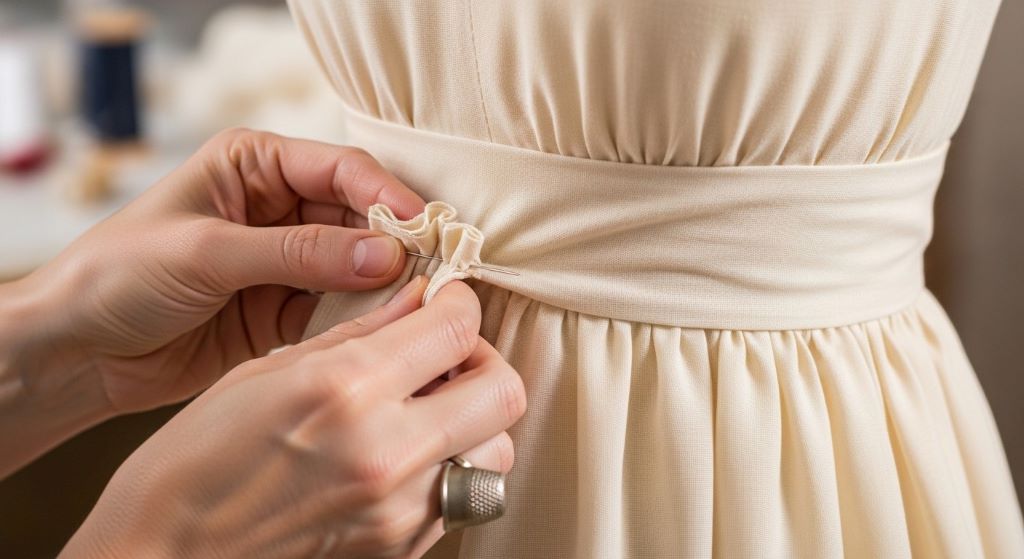
Run a gathering stitch along the top edge of the skirt piece. Pull the threads gently until the skirt width matches the bottom edge of the bodice. Distribute the gathers evenly. Then pin the skirt to the bodice with right sides together. Sew along the empire waist seam. This seam is the defining feature of the Regency silhouette. Therefore, take care to keep it straight and even.
Step 4: Sew the Back Opening
Most Regency dresses fasten at the back. The simplest method for a beginner is a placket opening with a few snaps or hooks and eyes. Fold and press the back opening edges neatly. Sew them down to create clean edges. Then attach your chosen closures evenly along the opening. However, if you prefer, you can also add a back zipper for a more modern construction.
Step 5: Finish the Hem and Neckline
Fold the bottom edge of the skirt up by about 1.5 centimeters, then fold again by the same amount. Pin and sew the hem all the way around. For the neckline, fold the raw edge inward and sew a narrow hem. Additionally, you can add a thin strip of fabric or lace trim along the neckline for a more authentic Regency look.
Step 6: Add the Ribbon Sash
A ribbon or fabric sash tied just below the bust is one of the most iconic features of a Regency dress. Choose a ribbon in a contrasting or complementary color. Sew small ribbon loops or tabs at the side seams of the empire waist to keep the sash in place. Then simply tie the ribbon at the front or back for a beautiful finishing touch.
Finishing Touches and Styling Tips
Once the dress is sewn, a few finishing touches can elevate the look significantly. These details are what separate a basic costume from a truly beautiful garment.
- Add delicate lace trim along the neckline and sleeve edges for an authentic period feel.
- Press the entire dress with an iron to remove any wrinkles and set the seams neatly.
- Pair the dress with flat ballet-style slippers and long white gloves for a full Regency look.
- Add a small drawstring reticule bag as an accessory, which was popular in the Regency era.
- Style your hair in a simple updo with soft curls framing the face to complete the ensemble.
Furthermore, embroidery along the hem is a beautiful optional detail. Simple floral motifs were very popular in the Regency period. Therefore, if you enjoy embroidery, this is a wonderful way to personalize your dress and make it truly unique.
Common Mistakes to Avoid
Every sewing project comes with learning opportunities. However, knowing common mistakes in advance can save you a lot of frustration. Here are a few pitfalls to watch out for when making your Regency dress.
- Skipping the seam allowance: Always add extra fabric beyond your measurements for seams.
- Uneven gathering: Take time to distribute gathers evenly before sewing. Uneven gathering makes the dress look messy.
- Choosing the wrong fabric: Heavy or stiff fabrics will not drape correctly. Stick to lightweight options.
- Not pressing seams: Ironing as you sew creates a much cleaner finished look.
- Rushing the hem: A crooked hem is very noticeable. Measure and pin carefully before sewing.
Conclusion
Sewing a simple dress based on Regency period fashion patterns is a deeply rewarding project. It connects you to a rich history of elegance and craftsmanship. The empire waist, flowing skirt, and delicate sleeves are timeless design elements that remain beautiful today.
To summarize, begin by gathering lightweight fabrics and the right tools. Take careful measurements before cutting any fabric. Follow the step-by-step sewing process, starting with the bodice and working outward. Finish with a ribbon sash and small decorative details to bring the look together.
Additionally, do not be discouraged if your first attempt is not perfect. Sewing is a skill that improves with practice. Therefore, embrace the process, learn from each step, and enjoy the creative journey. A handmade Regency dress is something truly special. It is a piece of wearable history made with your own hands.
Frequently Asked Questions
1. Do I need advanced sewing skills to make a Regency-style dress?
No, you do not need advanced skills. A basic Regency dress uses simple construction techniques like straight seams, gathering, and hemming. These are all beginner-friendly skills. However, having some experience with a sewing machine will make the process faster and smoother. If you are a complete beginner, start by practicing gathering stitches on scrap fabric before working on your main fabric.
2. How much fabric do I need for a Regency dress?
The amount depends on your size and the dress length. On average, plan for four to six meters of fabric for a full-length dress. The skirt requires the most fabric because it is gathered. Additionally, buy a little extra to account for mistakes or adjustments. It is always better to have more fabric than you need.
3. Where can I find Regency period dress patterns?
You can find Regency dress patterns in several places. Online platforms like Etsy and dedicated historical costuming websites offer digital and printed patterns. Additionally, books on historical costume construction often include period-accurate patterns. Look for patterns labeled empire waist, Regency, or early 19th century for the most relevant options.
4. Can I make a Regency dress without a sewing machine?
Yes, you can. Regency dresses were historically sewn entirely by hand. While it takes longer, hand sewing produces beautiful results and is more historically accurate. Use a small, even running stitch or backstitch for the main seams. Additionally, hand sewing allows for more control and is ideal for delicate fabrics that might be difficult to guide through a machine.
5. What is the best color for a Regency-style dress?
White and cream were the most fashionable colors during the Regency period. They reflected the influence of ancient Greek and Roman aesthetics. However, soft pastels such as pale blue, blush pink, and lavender were also popular. Therefore, any light, soft color will look authentic and beautiful. Avoid very dark or saturated colors if you want a historically accurate appearance.
Related Topics:
Inside 90s Chola Fashion: Makeup, Hairstyles, and Streetwear That Defined an Era
How to Style Jewelry with Dresses: A 2025 Guide for Every Occasion
