

How to Buy a Travel Duffel Bag Without Wasting Money
June 28, 2026
Benicia Peddlers Fair California 2026: Best Shopping, Food and Vintage Finds
July 1, 2026
You’re standing at the gate, bag in hand, hoping it fits in the sizer. We’ve all been there. The stress of wondering if your backpack will make the cut can ruin the start of any trip. Choosing the right airline approved backpack personal item backpack isn’t just about size—it’s about freedom. You want to walk past the baggage counter without a second thought, knowing your gear will stay by your side. This guide will show you exactly what to look for, how to measure correctly, and which features separate a true carry-on companion from a checked-bag disaster.
What Exactly Are Airline Carry-On Size Limits?
Most major airlines allow a carry-on bag that measures 22 x 14 x 9 inches, including wheels and handles. Personal items, like a backpack, usually max out at 18 x 14 x 8 inches. Budget carriers like Ryanair or Spirit have tighter restrictions, often allowing only 16 x 12 x 6 inches for a personal item. Always check your specific airline before buying.
The key is knowing the difference between “carry-on” and “personal item.” A carry-on goes in the overhead bin. A personal item fits under the seat. Many travelers use a backpack as their personal item, pairing it with a small roller bag. This combo lets you keep essentials close while maximizing storage.
To avoid surprises, measure your backpack when it’s fully packed. Soft-sided bags can bulge, pushing you over the limit. Hard-sided bags offer less flexibility but more protection. Look for backpacks with compression straps; they help shrink your load to fit those tight sizers.
How Do I Measure My Backpack Correctly?
Place your empty backpack on a flat surface. Use a rigid ruler or measuring tape. Measure length (top to bottom), width (side to side), and depth (front to back). Include any external pockets, handles, or wheels. Airlines measure the total dimensions, not just the main compartment.
Many travelers make the mistake of measuring their bag empty, then overstuffing it for a trip. A bag that fits empty may not fit when full. Always pack your bag as you would for travel, then measure again. If the depth increases by more than two inches, consider a smaller bag.
Pro tip: Some airlines have “sizer” bins at the gate. If your backpack fits snugly into that metal frame, you’re good. If it takes force to squeeze in, you risk being forced to check it. Aim for a bag at least one inch under the limit on all sides to leave a margin of error.
Why Soft-Sided Backpacks Are Easier to Fit
Soft-sided backpacks conform to the sizer better than hard-sided luggage. You can compress them by pushing down or adjusting straps. This flexibility makes them ideal for unpredictable airline enforcement. Look for backpacks made of nylon or polyester with some give.
Which Features Make a Backpack Truly Carry-On Ready?
A true airline approved backpack personal item backpack combines smart design with practical features. Look for a pass-through sleeve that slides over your roller bag handle, making airport navigation smoother. Compression straps reduce bulk and keep contents stable. A padded laptop compartment protects your electronics and adds structure.
Other essential features include:
- Multiple organizational pockets for passport, phone, and boarding pass
- A water bottle pocket that doesn’t add width
- Padded shoulder straps and a sternum strap for comfort during long walks
- Durable, water-resistant material to withstand rain and spills
- Lockable zippers for security in crowded areas
Consider the bag’s weight. A heavy empty backpack eats into your carry-on allowance. Aim for a bag under 2.5 pounds. Every ounce counts when you’re trying to avoid checking luggage.
Is a Daypack or a Travel Backpack Better for Flying?
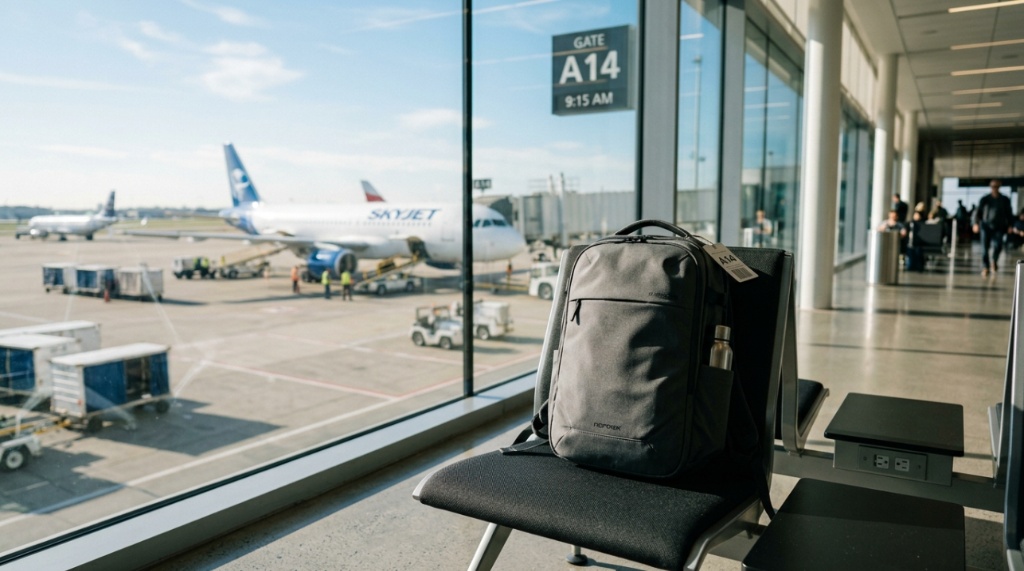
Daypacks (20–30 liters) are ideal for short trips or as personal items. Travel backpacks (30–50 liters) work for longer journeys but may not fit as a personal item. If you travel with only one bag, a 35-liter travel backpack is a sweet spot—big enough for a week’s clothes, small enough for overhead bins.
Daypacks excel at organization. They have pockets for everything, so you’re not digging through your bag at security. Travel backpacks often have a single large compartment with packing cubes. Choose based on your packing style. If you like structure, go with a daypack. If you prefer flexibility, a travel backpack wins.
For most flyers, a 25- to 30-liter backpack serves as the perfect personal item. You can fit a laptop, tablet, change of clothes, toiletries, and snacks. This setup lets you skip baggage claim entirely.
What About Laptop Sleeves and Tech Organization?
Always choose a backpack with a dedicated, padded laptop sleeve. It should fit your device snugly without adding extra bulk. Look for a sleeve that’s accessible from the side or top so you can remove your laptop without unpacking everything. Some bags have a “clamshell” opening that lays flat, making TSA checks much faster.
How Do Budget Airlines Enforce Backpack Size Rules?
Budget airlines are strict. They check size and weight at boarding. If your backpack exceeds their limits, you pay a hefty fee—often more than the ticket itself. Ryanair, Spirit, and EasyJet are known for this. Their personal item size is usually 16 x 12 x 6 inches. That’s smaller than standard carry-on dimensions.
To avoid fees, choose a backpack specifically designed for budget travel. These bags are slim but cleverly packed. They use every inch of space efficiently. Avoid external pockets that protrude. Keep your bag under the weight limit too—usually around 10 kg (22 pounds).
If you’re flying a legacy carrier like Delta or American, you have more room. Still, never assume leniency. Always check your airline’s website before you pack. Rules change frequently, especially after schedule updates or policy changes.
Can I Use a Hiking Backpack as a Carry-On?
Yes, but with caution. Hiking backpacks are tall and deep, often exceeding airline limits. A 40-liter hiking pack may be 24 inches tall—two inches over the standard. However, some brands like Osprey and Deuter offer specific travel models that meet airline requirements.
If you love your hiking pack, measure it carefully. Look for models with removable frames or straps that tuck away. External frame backpacks are almost never allowed as carry-ons. Internal frame bags may work if they’re small enough.
Packing a hiking backpack for air travel requires discipline. Use compression sacks for clothes. Skip the bulky sleeping bag or tent. Remember, you can always ship camping gear ahead to your destination.
Which Materials and Construction Are Most Durable for Air Travel?
Look for 1000-denier Cordura nylon or ballistic nylon. These materials resist abrasion, tears, and punctures. Ripstop nylon is lighter but still strong. Avoid cheap polyester—it wears quickly and offers less protection for your belongings.
Stitching matters too. Double-stitched seams and bar-tacked stress points add years to a backpack’s life. YKK zippers are the industry standard for reliability. Plastic buckles should be reinforced, not flimsy. A bag that costs more upfront may save you money in the long run.
Water resistance is another key factor. Look for a DWR (Durable Water Repellent) coating or a built-in rain cover. You don’t want your electronics soaked if you’re caught in a downpour running to your gate.
What About Anti-Theft Features?
Some travel backpacks include lockable zippers, hidden pockets, and slash-proof materials. These features add weight and cost but provide peace of mind in crowded airports or train stations. If you travel frequently in urban areas, consider a bag with a combination lock on the main compartment.
How to Pack a Carry-On Backpack Efficiently
Efficient packing starts with the right bag. Use packing cubes to separate clothes, electronics, and toiletries. Place heavy items (like a laptop) against your back for comfort. Roll your clothes instead of folding them—this saves space and reduces wrinkles.
Follow a system: put items you need during the flight (snacks, headphones, a book) in an easy-access pocket. Store your liquids bag in a zippered pouch near the top. Keep your passport and boarding pass in a dedicated security pocket.
Avoid overpacking. A half-empty backpack is easier to compress and fits more easily in a sizer. Leave room for souvenirs or items you pick up along the way. If you can’t close your bag without straining the zipper, you’ve packed too much.
Why Weight Matters More Than You Think
Many travelers focus only on dimensions, but weight is equally important. Airlines have weight limits for carry-ons, often 15–22 pounds. A heavy backpack can exceed this limit even if it fits the sizer. Weigh your bag at home before leaving.
Lighten your load by choosing a lightweight backpack in the first place. Some carry-on backpacks weigh under 1.5 pounds. Every ounce you save in the bag itself goes toward your belongings. Bring a small digital luggage scale—they’re cheap and prevent surprises at the airport.
When Should I Upgrade to a Premium Carry-On Backpack?
Upgrade if you travel more than four times a year or if your current bag causes stress. A premium backpack offers better materials, smarter organization, and longer life. It’s an investment in comfort and reliability.
Signs it’s time to upgrade: your zippers jam, straps dig into your shoulders, or you constantly struggle to fit your bag in the sizer. A well-designed premium backpack pays for itself by avoiding baggage fees and reducing travel anxiety.
Look for brands known for travel gear: Osprey, Tom Bihn, Peak Design, and Tortuga. Read reviews, watch video demonstrations, and check return policies. A good backpack should last at least five years of regular travel.
Frequently Asked Questions
Can I bring a 40-liter backpack as a carry-on?
Generally no. A 40-liter backpack is usually 22–24 inches tall, which exceeds most airline carry-on limits. Only 30-liter or smaller backpacks reliably fit under the seat or in overhead bins. Always measure your specific bag.
What is the best size backpack for a personal item?
18 x 14 x 8 inches is the most common personal item size limit. A 25-liter backpack fits comfortably within this range. It’s large enough for a laptop, change of clothes, and essentials, but small enough to slide under most airplane seats.
Do airlines actually measure backpacks at the gate?
Yes, especially budget airlines. They use sizer bins at the gate. If your backpack doesn’t fit, you pay a fee. Legacy airlines are less strict but may check if your bag looks oversized. It’s safest to assume your bag will be measured.
Is a rolling backpack allowed as a carry-on?
Yes, but it must meet the same size limits as any carry-on bag. Rolling backpacks often have rigid frames that make them harder to fit. They also take up overhead bin space. Most travelers prefer a soft backpack for flexibility.
How do I know if my backpack meets airline rules?
Check your airline’s website for exact dimensions. Measure your packed bag with a ruler. Compare to the airline’s limits. If in doubt, choose a smaller bag. You can also call the airline’s customer service to confirm.
Can I bring a backpack and a carry-on suitcase?
Most airlines allow one carry-on and one personal item. Your backpack counts as the personal item. The suitcase goes in the overhead bin. This combination is popular among frequent travelers for maximizing storage without checking bags.
What happens if my backpack is too big at the gate?
You’ll be required to check it. You may pay a fee, sometimes $50 or more. The airline will tag your bag and take it to the cargo hold. This can cause delays for you and other passengers. Always double-check your bag’s size before arriving at the gate.
Even if a bag meets the strict dimensional limits of budget airlines, a heavy pack will quickly wear you down at the gate. To maximize your packing capacity without sacrificing comfort, you should aim to travel light with the best lightweight travel backpack that uses modern, durable nylon fabrics.
Conclusion
Choosing a backpack that meets airline carry-on rules doesn’t have to be complicated. Focus on size first—measure your bag packed, not empty. Consider your airline’s specific limits, especially for budget carriers. Look for features like compression straps, a laptop sleeve, and durable materials. A well-chosen backpack saves you time, money, and stress at every step of your journey.
Remember, the right backpack is your travel partner. It keeps your hands free, your belongings safe, and your mind at ease. Invest in quality, pack smart, and you’ll breeze through airports like a pro. Your next trip starts with the bag on your back—make it one that works for you, not against you.
Ready to find your perfect travel companion? Check out our curated list of top-rated options for the airline approved backpack personal item backpack that combines style, function, and affordability.
